ity the tough life of a surveyor. A bunch of them were traipsing around
in the woods near my house today, reminding me that there's not only
poison ivy everywhere but also millions of ticks.
ity the tough life of a surveyor. A bunch of them were traipsing around
in the woods near my house today, reminding me that there's not only
poison ivy everywhere but also millions of ticks.
There are two types of ticks.
Soft ticks (Argasidae), about 200 species. Their bite only lasts 15 to 30 minutes. They primarily feed at night; often found in rustic cabins.
Hard ticks (Ixodidae), about 700 species. Feeding lasts several hours to days. Hard ticks have a ‘plate’ or scutum on their back. They primarily feed during the daytime; often found in brushy, grassy, or vegetated areas at the edge of forests. These are the bad ones.
The Lymedisease.org site has photos of different kinds of ticks.
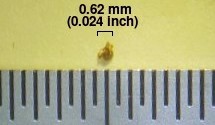
A tick. Contrary to popular belief, young ticks bite humans. They get bigger and darker with age
There are over 450,000 estimated cases of Lyme disease per year in the US. Human-biting ixodid ticks, mainly Ixodes scapularis, transmit over 15 species of pathogenic microorganisms, including viruses such as Colorado tick fever virus, Bourbon virus, Heartland virus, and Powassan encephalitis virus; bacteria that cause anaplasmosis, ehrlichiosis, three strains of Lyme disease (Borrelia burgdorferi, B. afzelii, and B. garinii), relapsing fever (B. miyamotoi), spotted fever group rickettsiosis, and tularemia (Francisella tularensis); and parasites that cause babesiosis (Babesia microti).[1]
Both male and female ticks bite. However, only the female engorges itself with blood. Male ticks apparently only “hang around” long enough to find a mate, and don't stay attached long enough to cause disease. If a tick is on a person, the tick is most likely to be a female. (This information is surprisingly hard to find.) Ticks can't jump; a person must brush against vegetation or sit on a surface (such as a lawn chair) to get bitten.
Removing a tick
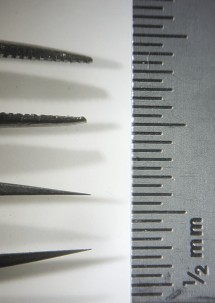
Top: Ordinary fine tweezers
Bottom: High-precision tweezers
suitable for removing ticks
A person bitten by a tick might have no symptoms or might have symptoms ranging from itchiness to fatal paralysis. No matter what, it's essential to remove the tick.
You need to prepare in advance by obtaining a pair of fine-tipped tweezers. Good ones aren't cheap. For example, McMaster high-precision tweezers with 0.004-inch wide slim pointed tips (part no. 5184a17) will do the job; ordinary fine tweezers won't. They are $62 each but the blades mesh precisely and are fine enough to reach under the tick.
5-SA-ESD tweezers are even better and less expensive, but hard to find as the brand keeps changing.
Lyme disease is carried by deer ticks, which are much smaller than dog ticks. Female adult deer ticks have a black shield and eight dark legs. They're about the size of a poppy seed. Nymphs are 1–2 mm long. Larvae are less than 1 mm long. Larvae usually bite smaller hosts such as rodents and birds before graduating to humans. The most common carriers of Lyme disease are the adults (1 in 3) and nymphs (1 in 5) and they are very hard to see. They appear as small black dots, usually in the middle of an inflamed area. If you have a ‘mosquito bite’ with a speck of black dirt in the center, it's likely a deer tick.
To remove it, position the tweezers under the speck and pull slowly up without squeezing it. At this point if you examine it under a microscope you'll see the classic eight legs still moving, at which point you'll know that it was indeed a tick and it's safe to crush it with a flat steel blade. If you remove the tick within one or two days, it's unlikely to induce disease.
By contrast, dog ticks are reddish brown with a grooved shield. They're twice as big as deer ticks and they don't carry Lyme disease—only Rocky Mountain spotted fever, tularemia, and tick paralysis.
Preventing ticks
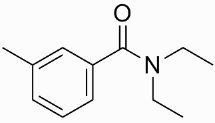
DEET (N,N-Diethyl-meta-toluamide) is an amide compound that blocks insect olfactory receptors for 1-octen-3-ol, which is produced by humans. Although the pH of Off spray is only 8.0, DEET has a very bitter taste. However, it would not be effective as a cannibal repellent
Triazicide granules Spread triazicide granules around any areas where deer, mice, or squirrels may have been, including areas of mulch or vegetation that may come in contact with a person. Triazicide is a specific pyrethroid called gamma-cyhalothrin. Pyrethroids bind to the sodium channels on insect nerve cells, keeping them in an open state, which causes continuous nerve stimulation and eventually paralysis and death.
Other pyrethroid and organophosphate acaricides are also effective, especially in spray form instead of granules. It's claimed [2] that Ortho Bug-B-Gon is more effective (100%) compared to triazicide (98.5%) and Advanced Complete Insect Killer (95.8%). Note that pyrethroids also kill desirable insects and beetles, including fireflies.
DEET will prevent ticks from biting. DEET also works on ground bees to some extent, but not completely: they will still sting but are unable to inject as much venom, as the DEET seems to make it harder to target you.
Biological control using Metarhizium entomopathogenic fungi, which are delivered as granules. This fungus can spread to neighboring plants to protect them as well.
Permethrin-treated clothing. Permethrin is a synthetic form of pyrethrins, which are natural insecticides from chrysanthemum flowers, but doesn't degrade as rapidly. However, permethrin is also slightly more toxic to humans, cats, and dogs as it blocks sodium channels in mammals, not just insects. It can cross the blood-brain barrier and produce neurotoxicity if absorbed at high enough concentrations (>150 mg/kg),[3] so care is needed.
Another solution is to create deer feeding stations that apply acaricide to the deer when they eat the corn kernels. Similar bait stations called bait tubes are useful for mouseborne ticks.
Remember the advice that TV drug commercials give you: If your arms fall off, pick up your phone and call your doctor right away. If your legs fall off, run to the nearest emergency center.
Vaccine controversy
Since the Lyme disease vaccine LYMErix was removed from the market in 2002, new vaccines are planned. However, some of these may use the nucleoside-modified mRNA-LNP platform, which has faced resistance due to poor control of the expressed antigen in similar vaccines.
LYMErix was removed from the market because of claims emphasizing the benefits with little or no mention of potential risks. [4] These risks included an efficacy of less than 80%, a requirement for three vaccine doses and yearly boosters, effectiveness only against the North American strain of Borrelia, a lack of clinical data for young children, and adverse reactions reported by the nonprofit Lyme Disease Network. An FDA re-analysis and VAERS data failed to support claims of excess side effects, but later research suggested that patients with human leukocyte associated antigen (HLA) DR4+ (HLA-DRB1*0401) genotype had an abnormal sensitivity to the OspA antigen found in the bacterium and in the vaccine. This means that patients with DR4+ could have gotten a cross-reactive autoimmune response after vaccination. This was a new phenomenon: it was realized that some patients could be genetically susceptible to a vaccine that failed to show toxicity in clinical testing. The manufacturer, GSK, denied that the vaccine was harmful but withdrew it from the market to avoid further litigation. The controversy remains unresolved, with the US CDC saying it was discontinued merely due to insufficient demand.
A special issue of 2024 Parasitology has 17 scientific articles, mostly open access, on ticks and tick-borne diseases. And of course there's the ever-popular journal Ticks and Tick-Borne Diseases—always great summertime reading.
Snakes
If a snake gets on your property, there's no more need to wrangle it into a garbage can and chuck it onto somebody else's property. A product called Lizard Defense works beautifully. It has a hand sprayer that sprays a combination of peppermint oil, clove oil, and cinnamon oil that repels reptiles. If you spray it directly on the snake, the snake repels itself and will go in the desired direction to escape. Once it's gone, create a barrier to prevent it from returning.
The snake seems to be thinking, “Oh God, it must be Christmas already! I smell just like those two candy canes I tried to chat up last year at that awful, awful party. So embarrassing!”
Update (Aug 15, 2025) As always happens, as soon as you find something that works, they stop making it.
[1] Eisen L. Control of ixodid ticks and prevention of tick-borne diseases in the United States: The prospect of a new Lyme disease vaccine and the continuing problem with tick exposure on residential properties. Ticks Tick Borne Dis. 2021 May;12(3):101649. doi: 10.1016/j.ttbdis.2021.101649. PMID: 33549976; PMCID: PMC8056288.
[2] Wȩżyk D, Bajer A, Dwużnik-Szarek D. How to get rid of ticks: a mini-review on tick control strategies in parks, gardens, and other human-related environments. Ann Agric Environ Med. 2025 Mar 25;32(1):1–8. doi: 10.26444/aaem/189930. PMID: 40159730. Note that this article has a serious error about NASA's TICKbot The TickBot uses CO2 (carbon dioxide) produced by dry ice, not carbon monoxide as the paper says. CO2 causes the ticks to 'jump' onto a cloth treated with pyrethrin insecticide.
[3] López-Aceves TG, Coballase-Urrutia E, Estrada-Rojo F, Vanoye-Carlo A, Carmona-Aparicio L, Hernández ME, Pedraza-Chaverri J, Navarro L, Aparicio-Trejo OE, Pérez-Torres A, Medina-Campos ON, Martínez-Fong D, Sánchez-Valle V, Cárdenas-Rodríguez N, Granados-Rojas L, Pulido-Camarillo E, Rodríguez-Mata V, León-Sicairos CDR. Exposure to Sub-Lethal Doses of Permethrin Is Associated with Neurotoxicity: Changes in Bioenergetics, Redox Markers, Neuroinflammation and Morphology. Toxics. 2021 Dec 6;9(12):337. doi: 10.3390/toxics9120337. PMID: 34941771; PMCID: PMC8704605.
[4] Nigrovic LE, Thompson KM. The Lyme vaccine: a cautionary tale. Epidemiol Infect. 2007 Jan;135(1):1-8. doi: 10.1017/S0950268806007096. PMID: 16893489; PMCID: PMC2870557. Link
jun 25 2025, 3:38 am