ne day I was watching some movie and
suddenly the TV wouldn't go off. No matter which buttons I pressed on the
remote, it wouldn't stop. Then a chainsaw started revving somewhere,
over and over, there was screaming, and there was blood all over!
ne day I was watching some movie and
suddenly the TV wouldn't go off. No matter which buttons I pressed on the
remote, it wouldn't stop. Then a chainsaw started revving somewhere,
over and over, there was screaming, and there was blood all over!
So I turned off the TV using the little button on the side, took the remote apart, and cleaned off those little rubber electrical contacts with isopropanol. These days, a TV rarely breaks. It doesn't have to. Some don't have any switches at all. When the remote stops working, all you can do is throw the TV away and buy a new one.*
In the old days, people could repair their radios and small appliances. Today the consensus seems to be that everything is too computerized, too complicated to fix. That era, people agree, is gone.
It's not true. Not only do we spend more time repairing things that break, we now have to fix them when they're new—and often, re-engineer them before they work at all. Here's a partial list of items I've had to fix just in the past two years.
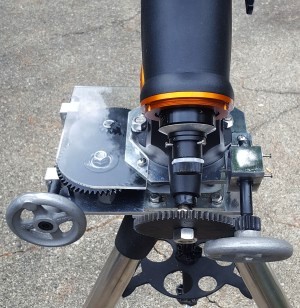
Re-engineered telescope mount
Water bath
A water bath is a small temperature-controlled tank used to keep samples at a constant temperature. Stuff made in West Germany, as this one was, lasted longer than the country itself, but this one only worked when you pounded on it. Everybody wanted to throw it away. I brought in a soldering iron and fixed a broken trace on the circuit board. That thing is still going, 35 years after being made.Refrigerator relay switch
A laboratory refrigerator, which is like a home refrigerator except that it costs twice as much and has no ice maker, started clicking and wouldn't cool. The usual procedure was to call a repairman, who needed a PO and would show up a couple weeks later, stroke his beard for an hour, tell us it was busted, and charge us a thousand bucks. The problem was the relay switch. In fact, the hardest part was getting the cover off. (Actually, getting it off is easy. The hard part is always getting it back on.)Table
Yes, a table. The guys in my lab once picked up a heavy lab table and put all the weight on one leg, snapping it off. I came in to discover four guys with PhDs standing around helplessly with no idea what to do. They all wanted to call Maintenance. Alas, we had no such thing as a maintenance department. As I lined up an L-bracket, they were skeptical that anyone could do such a complex thing. One of them said it was impossible because there were no holes in the leg to attach it to. Honestly, what do they do when they get a flat tire?Getting a reputation for doing genius-level tasks like drilling a hole in a piece of wood is not all gravy. A few weeks later one of the four guys came in saying the $35,000 scanner was broken. It turned out the power supply inside the machine had somehow gotten burned to a crisp. It was easy to fix: just swap out everything burnt with things that were un-burnt. And then figure out how to get the cover back on. And then try to get it back on the network.
-
Water purifier
Nowadays, people use water purifiers in the lab instead of making distilled water as they used to do. We bought four of one particular type that has a big permanent magnet DC motor attached to a water pump. Unfortunately, the pumps always leaked. When you took them apart, a huge pile of rust would fall out. The new model improved a little, but I had to keep a big stock of extra pumps. I should have listened to my colleague who bought a Milli-Q. Microscope, made in China
This inexpensive microscope had a gear-and-rack system that was supposed to focus it. The optics were okay, but the focus knob did nothing. I had to re-engineer it before it could be used. A simple mechanical change.Microscope, made in Switzerland
Lest anyone think large Asian countries have a monopoly on bad engineering, we had a microscope from a big German company whose name starts with an 'L'. It came without the software needed to make it work. The company wouldn't sell us that software, and the CD that came with it was for the wrong instrument. This one couldn't be fixed. So we switched to Zeiss.Telescope mount
A telescope mount uses little stepper motors to track the stars. Before that will work, you're supposed to align it by pointing it to three widely spaced stars. In my area, only one of those stars was ever visible at one time, so I had to align it manually to Polaris using tiny knobs. They were clumsy and they never worked. So I got some gears from a Harbor Freight car winch, attached some aluminum wheels, and re-engineered the whole thing. It took a week and the mount ended up weighing 92 pounds, but it worked. These things get rained on, so the challenge was keeping the gears from getting rusty.Camera mount
When my cheap, rickety camera tripod finally fell apart, I replaced it with one that had a ball head. Big mistake. A ball head has two knobs. One lets you change the azimuth (or "pan" as photographers call it). The other releases the ball, which causes your camera to slam straight down and smash into the front of the tripod. So I had to buy a geared head, which has three independent worm gears and three knobs for pan, tilt, and leveling. Unfortunately, in a misguided attempt to eliminate backlash, the manufacturer used a strong spring that made the knobs so stiff that rotating them was nearly impossible. Re-engineering it (see photo)—not made any easier by the brittle filler-filled polyethylene knobs—took several hours but made it easy to use.
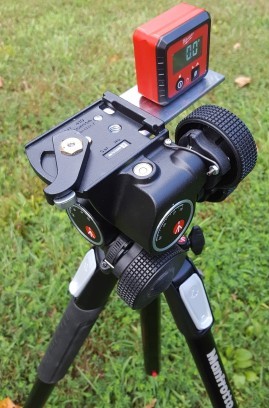
Re-engineered geared tripod head, showing two of the bigger knobs that were installed and the hose clamps that were installed to reduce the force of the spring
I could go on and on: washing machines that start making banging noises and then stop working, clothes dryers that go dead from the heat, Dremel tools that jam up, Defiance flashlights with crappy switches, wobbly computer monitor stands, electrical outlets with bad wiring, and lots of lamps, like those LED panels that throw away half their light because the diffuser is oriented wrong. Don't get me wrong: a Dremel is nicely designed and easy to get back together after you take it apart. Defiant later re-designed their switches, though I still prefer the old ones that I changed to use a toggle switch.
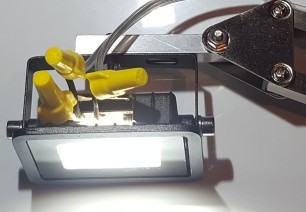
LED lamp showing rectangular repair hole. Lamp is only 80 mm wide and is in a sealed aluminum case. It's sturdy but because of its small size, it reaches 175°F. A general rule is that the fault is usually under the ‘Quality Control Passed’ sticker
Just this week a new LED lamp I ordered was dead on arrival. Rather than sending it back and waiting around for two more weeks, I just repaired it by cutting a hole through the QC PASSED sticker and re-attaching the loose 120 volt wire. (Luckily it was the neutral, not the hot so it wasn't a shock hazard, only a fire hazard.)
I have three egg timers that I use for skipping TV commercials. Two required re-engineering: one to replace a bad contact switch and one to replace a buzzer that fell apart after a week of use. (They both used a manufacturing technique known as “fall into a hundred pieces after removing the screw.”)
It may be true that cars with computers running everything are designed to be harder to repair. E-devices like computer motherboards, especially if they have chips with BGA, are now mostly too small to repair by hand (except for the capacitors, which we old folks all learned how to replace).
But knowing how to fix things reduces your dependence on Big Tech and Big Repair Guy. There are still some things, like X-ray machines and things containing Jet A1, that people probably shouldn't fool around with. But with a little determination and a willingness to learn, anybody can grab a little liberty by fixing things that break. You can still learn the skills, even if you have a PhD.
* Or you can sometimes re-program some universal remote control.
sep 01 2025, 4:34 am