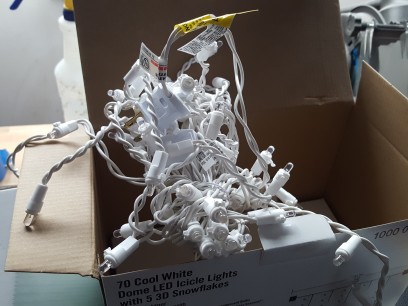
Fig. 1. Christmas lights come pre-tangled in a box
 mericans who buy made-in-China Christmas lights this year will be struggling
until March to untangle them. The plan is obvious: their government wants
to keep us distracted disentangling Christmas lights for three months while
they invade Taiwan.
mericans who buy made-in-China Christmas lights this year will be struggling
until March to untangle them. The plan is obvious: their government wants
to keep us distracted disentangling Christmas lights for three months while
they invade Taiwan.
In past years, the only decorations I had were colored compact fluorescent bulbs. Unfortunately, all I had was one red bulb and one ultraviolet bulb, so it didn’t look Christmassy enough. Since I’m now stuck in the burbs, something had to be done.
Solution: a string of LED lights (Fig. 1). They come pre-tangled for your convenience and they’re specifically designed to take hours to untangle. They’re engineered so if you give up and cut the wires and re-solder them in a different point they will blow out, forcing you to buy new ones. But what makes them interesting is the question: how do these things work without a DC power supply?
Why do they flicker?
LEDs only emit light when the voltage is above a certain value, usually around 1.7 volts. If the current goes in the opposite direction, they remain dark (or maybe burn out). This means they're strictly DC devices. When they’re on DC, there’s no flickering at all. But if you make a circuit diagram (Fig. 2) you’ll find that they’re using a trick to get them to run on AC, and that is why they flicker.
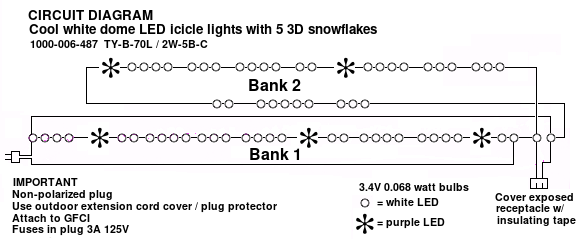
Fig. 2. Christmas light circuit diagram
The trick is to have two banks of LEDs. The LEDs in each bank are in opposite orientations. This means they’re powered from opposite phases of AC, so the two banks flicker alternately. The cumulative voltage drop brings the voltage down from 120 to the correct voltage (in this case, 3.4 volts). During the dark phase, the LEDs still get voltage but it’s the wrong polarity, so no light is produced. The LEDs are designed to handle reverse voltage without breaking.
According to Digikey, some other designs of AC LEDs use many banks of LEDs along with an IC chip and a transistor for each bank so that each bank is operating at a different time. This makes the flickering less evident. Flickering is a big problem for companies because they know if LEDs get a reputation for flickering, people won’t buy them.
Even though these LED lights are on AC, the manual warns not to insert them backwards. This would cause the entire bank to go dark. Inserting them backwards would also probably damage the socket.
This type of lighting flickers at 120 times a second. If your pathway lights use DC, it might be easier to build your own and tie into that. If so, your LEDs will switch on at the same time as your pathway lights and they won’t flicker. You could even wire them in parallel so one dead bulb doesn’t kill the whole string.
Why not just cut the wires to disentangle them?
As tempting as it may be to cut the wires and solder them back together, the length of the string is carefully designed by highly paid elves to reduce the voltage and current without the need for a current-limiting resistor. If you change the circuit in any way, you must re-calculate the current drop. For instance, you shouldn’t cut the plug out of the circuit (as, for example, by hard-wiring them). It contains a fuse and maybe control circuitry to limit the current during the peaks of the AC.
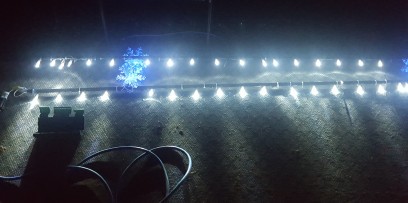
Fig. 3. Christmas lights in aluminum U-channel being tested
Safety
Even though there are only three volts between each LED, that doesn’t mean they’re risk-free. They’re on the house current and still exposed to rain, so you still need a GFCI outlet, an outdoor extension cable, and an outdoor extension cord cover / plug protector, which is a green insulating tube found at most hardware stores.
Experts also advise us to put them up before the first snow. If something breaks, you don’t want to be climbing up a snow-covered ladder to fix it. They also say to listen for “buzzing or crackling” sounds and to keep both ends well insulated. My neighbor found this out the hard way when we got three inches of rain and his lights shorted out.
That may all be obvious, but to Christmas light beginners like myself there’s an even more important warning: Never put Christmas lights back in their original box. You would have to untangle them all over again. My solution was to attach them to an aluminum U-channel (Fig. 3) and hang it from brackets. This ensures they’ll never get tangled again. As Washington warned, beware of foreign entanglements.
Update, Dec 18, 2025: Now that Christmas lights are on sale, my neighbors, in typical suburb style, just beat me by putting up a gigantic snowflake display with a thousand LEDs animated to look like falling snow. The soft-white color makes it look like a blizzard of yellow snow. Another neighbor has so many red and green lights their house looks like a railroad yard.
dec 09 2025, 7:38 am. updated dec 18, 2025