s we all know, science is strongly biased toward finding problems.
You get no prizes for showing that something is safe. Unfortunately,
this causes publication bias that transfers to policies enacted by
politicians who don't or can't read the literature.
s we all know, science is strongly biased toward finding problems.
You get no prizes for showing that something is safe. Unfortunately,
this causes publication bias that transfers to policies enacted by
politicians who don't or can't read the literature.
One chemical that people are concerned about is nitrite (NO−2), which the news media sometimes confuse with nitrate (NO−3). They are chemically different. In the past, it was assumed that nitrites were carcinogenic due to the formation of N-nitrosamines. New scientific research (summarized here) now throws that claim into doubt. But we can't be sure: the field is a wild West.
Vegetables of death
Nitrites are not just found in bacon. Lettuce, tomatoes, and most leafy vegetables are also high in nitrites. Tomatoes were found in a Romanian study to have 0.49 ± 0.17 mg/kg nitrite. Lettuce had 0.79 ± 0.42 mg/kg.[1] This is lower than bacon, which one study found to have a mean concentration of 10.8 mg/kg.
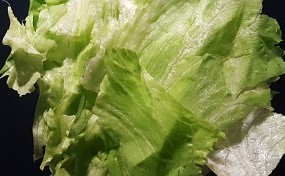
Lettuce. I couldn't find any arugula anywhere
However, a Danish study got the opposite result. In a paper containing the most badly formatted table known to man,[2] nitrite in lettuce reached 18 ± 1 mg/kg upon storage, nearly twice as high as bacon. Arugula, which is claimed to be “a nutritional powerhouse with impressive health benefits,” contained 2448 ± 213 mg/kg (226 times higher than bacon), while spinach had 950 ± 58 (88 times more) and parsley came in second with 1207 ± 93 (112 times more than bacon). The levels increased with time of storage, maxing out by 24h. And yes, the authors clearly meant milligrams (mg), not micrograms (μg).
The authors blame nitrate fertilizers under the assumption that nitrate is being converted to nitrite; but of course nitrate is normally in the soil and is essential for growth. When these leafy vegetables were stored frozen at −20°C or −80°C, nitrite was not detected. The authors say this means that storage temperature affects it, but the problem is that freezing lettuce makes it inedible. It's not known whether it's enzymatic activity or bacteria that are doing the dirty deed.
Hot dogs of death
A group of Polish researchers found that hot dogs (which they equated to Polish sausage) contained an average of 60.30 mg/kg nitrites, and suggested that one Polish sausage a day might pose a health risk for young children.[3]
A meta-analysis,[4] however, found no significant association between nitrate or nitrite intake and digestive system cancers. In fact, when corrected for factors like sex, region, and fiber intake, nitrite intake had a small protective effect. Elsewhere, scientists are busy creating drugs to increase nitrite release [5] because nitrite is metabolized to nitric oxide (NO), an essential signaling molecule.
As with any chemical, the dose makes the poison. There have been 94 cases of people committing suicide by ingesting sodium nitrite.[6] Autopsies showed nonspecific signs of asphyxia and dark discoloration of the hypostasis (the settled blood after death) and blood. The authors say methemoglobin, a brownish form of hemoglobin in which the heme iron is oxidized, ranged from 6 to 92% of the total hemoglobin.
The LD50 of NaNO2 is said to be around 71 mg/kg body weight. This means a 150 kg person would have to ingest 10,650 mg of nitrite (the equivalent of 176.6 kg of Polish hot dogs or 4.34 kg of arugula) to have a fifty percent chance of being killed by the nitrite. Arugula costs about $11.21 per kg in the US.
Bacon sandwiches of Death
Most people aren't concerned about overdosing from nitrite. The bigger concern is the possibility of cancer from nitrite metabolites such as N-nitrosamines. There is still controversy about this risk, but unsubstantiated claims from activists will only create skepticism. An example is a group of “leading experts” who recently called for restrictions on bacon.
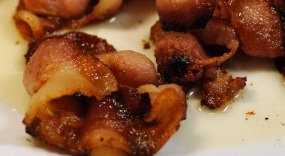
Pieces of bacon pried from my cold, dead, and slightly greasy hands
The media don't have a link to the supposed study. That's because there isn't one. It's a letter by an NGO called the Coalition Against Nitrites. The WHO classified processed meat as a Group 1 (i.e., human) carcinogen,[7] the same category as asbestos and tobacco, in 2015. The NGO demands cancer warnings on processed meats and regulations to phase out nitrite. If a good alternative isn't found, that would put bacon on the same trajectory as asbestos, which is banned in “over 60” countries (the exact number depends on the source) with activists, as always, claiming a cover-up. That's a code word meaning they get to sue the company.
The NGO claims that nitrites cause 5400 cases of bowel cancer in the UK, costing £3 billion in the past decade. Their evidence does not back up that claim. Their 'evidence' page (Footnote 1) consists of two observational studies on breast cancer; an article on mania caused by some other chemical cited twice; two articles that don't exist; an opinion article; an old blurb in the UK Guardian; and one fatally flawed paper that used the wrong controls. This shows that their demand has little or no basis in science.
Consumption of processed meat accounts for only 5% of nitrite exposure, with vegetables accounting for several percent more (one source [8] says 80%, but the reference they cite says nothing about nitrite)*. Whatever the amount, neither the NGO nor the WHO would ever dare propose banning vegetables.
Global warming of death
Nitrites are turning out to be like dietary cholesterol: people heard it's harmful, they just won't accept the new data, so they keep citing each other. Maybe the new data will turn out to be wrong. The new results might also be biased because they appeared just as 3-nitrooxypropanol (3-NOP, aka Bovaer), a nitrite-forming chemical given to cows to reduce supposed cow-induced global warming, came into use. If activists decide that pigs cause global warming, we can expect more politicized science: nitrite-forming compounds prevent formation of methane, but they also, it's claimed, cause cancer. Until we get some unbiased facts, we shouldn't base science policy on flimsy evidence like that on an activist website.
Nitrite and nitrate metabolism of death
Until recently, it was believed that most nitrite was produced from nitrate by commensal anaerobic bacteria in deep crypts in the tongue or in the stomach. The finding that leafy vegetables could be a major source of nitrite and the recognition that the nitrate and nitrite serve as reservoirs for nitric oxide (NO) [15], a dissolved gas that performs essential biological functions, throw a huge monkey wrench into this simple picture. Yes, that's a mixed metaphor, but that's not important right now.
Nitrate is concentrated in the mouth by the nitrate/proton transporter protein sialin. Bacteria located in the tongue convert nitrate to nitrite by nitrate reductase enzymes.[16] Nitrate is also converted to NO by enzymes in the xanthine oxidation-reductase pathway.
Nitrite is reduced to NO non-enzymatically in the acidic environment of the stomach. It's also converted to NO by enzymes including xanthine oxidase, cytochrome C oxidase, endothelial NO synthase (eNOS), and possibly even deoxyhemoglobin.[18] Nitrite in blood is rapidly converted to nitrate with a half life of 110 seconds,[15] which means it could never reach a toxic level from dietary sources. (Normal levels are 50–100 nanomoles per liter). Under periods of ischemia, when vasodilation is badly needed, nitrite and nitrate are important donors of NO. In ischema, iNOS (inducible nitric oxide synthase)[17] also produces NO. Thus, like iNOS, nitrite can be thought of as a regulator of hypoxic signaling.[18]
All this fascinating biochemistry stuff means that the risk, if any, depends on the concentration × time (what pharmacologists call area under the curve) and on the rates of the various reactions: nitrate to nitrite, nitrite back to nitrate, nitrite to nitrosamine, and nitrite to NO, in different parts of the body, or ‘compartments.’
There is still debate on the topic, and some understanding of toxicology will help, so I included eleven references to the primary literature here.
Alternatives of death
Alternatives such as bamboo leaf extract, rose extract, oregano oil, radish powder, kimchi powder, nisin nanoparticles, and potassium bixinate can prevent formation of N-nitrosamines [9] but they all have disadvantages, so nitrite is still essential. Gamma radiation seems to be the most effective alternative. (Note that this could affect the taste but would not make your bacon radioactive.) And of course, you can buy nitrite-free bacon today in many grocery stores if you so desire. But to get nitrite-free lettuce, you'd have to buy lettuce frozen at the farm and store it continuously in the freezer. And then you'd have to somehow convince yourself to eat it.
* Both the technical and popular literature are full of typos on this topic. Instead of ‘nitrite’ and ‘nitrate,’ authors should always write NO−2 and NO−3.
[1] Dodocioiu AM, Buzatu GD, Botu M. Nitrates and Nitrites in Vegetables and the Health Risk. Foods. 2025 Aug 29;14(17):3037. doi: 10.3390/foods14173037. PMID: 40941153; PMCID: PMC12428181.
[2] Clayton-Cuch D, Niklas AA, Duedahl-Olesen L, Amlund H, Sloth JJ. Nitrite, nitrate and N-nitrosamine occurrence in processed nitrate accumulating vegetables stored under different conditions. Food Chem. 2025 Nov 30;493(Pt 1):145631. doi: 10.1016/j.foodchem.2025.145631. PMID: 40737936.
[3] Jakkielska D, Topolska B, Baran K, Kurzyca I, Wolska J, Frankowski M, Zioła-Frankowska A. Nitrate and nitrite content in hot dogs and assessment of health risks to Polish consumers. Sci Rep. 2025 Jul 24;15(1):27000. doi: 10.1038/s41598-025-12891-x. PMID: 40707635; PMCID: PMC12290118.
[4] Long B, Jiang C, Liu Z, Wan P, Guo Q. Association of dietary nitrate and nitrite from plant sources with digestive system cancer risk: a systematic review and meta-analysis. Nutr Metab (Lond). 2025 Jul 25;22(1):84. doi: 10.1186/s12986-025-00973-6. PMID: 40713740; PMCID: PMC12297779.
[5] Sahu S, Kumar S, Mugesh G. Glutathione-Triggered Nitrite Release From Organic Nitrites Enhances Nitric Oxide Bioavailability in Mammalian Cells. Chemistry. 2025 Oct 3:e02890. doi: 10.1002/chem.202502890. PMID: 41041958. paywalled.
[6] Mazzini E, Feola A, Fracassi I, Carfora A, Porzio A, Severino SA, De Simone M, Campobasso CP. Suicide by sodium nitrite ingestion: a systematic review. Forensic Sci Med Pathol. 2025 Aug 30. doi: 10.1007/s12024-025-01066-9. PMID: 40884608.
[7] IARC monographs on the evaluation of carcinogenic risks to humans. Lyon, France: 2018. Red Meat and Processed Meat Volume 114. https://publications.iarc.who.int/564
[8] Ferysiuk K., Wojciak K.M. Reduction of nitrite in meat products through the application of various plant-based ingredients. Antioxidants. 2020;9(8):1–28. doi: 10.3390/antiox9080711
[9] Zhang Y, Zhang Y, Jia J, Peng H, Qian Q, Pan Z, Liu D. Nitrite and nitrate in meat processing: Functions and alternatives. Curr Res Food Sci. 2023 Feb 24;6:100470. doi: 10.1016/j.crfs.2023.100470 PMCID: PMC9986499 PMID: 36891544 Link
[10] Meat intake and breast cancer risk from the Health Examinees study. Lee H, Shin WK, De la Torre K, Min S, You SH, Han W, Lee JE, Kang D. Clinical Nutrition 53, October 2025, Pages 109–118. paywalled. Link
[11] Nitrated meat products are associated with mania in humans and altered behavior and brain gene expression in rats. Khambadkone SG, Cordner ZA, Dickerson F, Severance EG, Prandovszky E, Pletnikov M, Xiao J, Li Y, Boersma GJ, Talbot GC, Campbell WW, Wright CS, Siple CE, Moran TH, Tamashiro KL, Yolken RH. Molecular Psychiatry 25, 560–571 (2020). paywalled.
[12] Associations between Preserved Foods and Breast Cancer Risk in Hong Kong Chinese Women. Lee PMY, Kwok CH, Tsoi YK, Wu C, Law SH, Tsang KH, Yeung YC, Chan WC, Tse GM, Yuen KK, Hung RKW, Wang F, Tse LA. Cancer Prev Res (Phila). 2022 Aug 1;15(8):497–507. doi: 10.1158/1940-6207.CAPR-21-0509. PMID: 35504011. Link
[13] Dietary inclusion of nitrite-containing frankfurter exacerbates colorectal cancer pathology and alters metabolism in APCmin mice. Crowe W, Pan X, Mackle J. et al. npj Sci Food 6, 60 (2022). https://doi.org/10.1038/s41538-022-00174-y
[14] Carcinogenicity of consumption of red and processed meat. Lancet 16, 1599–1600 December 2015 Bouvard V, Loomis D, Guyton KZ, Grosse Y, El Ghissassi F, Benbrahim-Tallaa L et al. Link
[15] Ma L, Hu L, Feng X, Wang S (2018).Nitrate and Nitrite in Health and Disease Aging and Disease 9(5), 938–945. http://dx.doi.org/10.14336/AD.2017.1207 open access.
[16] Qu XM, Wu ZF, Pang BX, Jin LY, Qin LZ, Wang SL. From Nitrate to Nitric Oxide: The Role of Salivary Glands and Oral Bacteria. J Dent Res. 2016 Dec;95(13):1452-1456. doi: 10.1177/0022034516673019. PMID: 27872324. paywalled.
[17] Farahani A, Farahani A, Kashfi K, Ghasemi A. Inducible nitric oxide synthase (iNOS): More than an inducible enzyme? Rethinking the classification of NOS isoforms. Pharmacol Res. 2025 Jun;216:107781. doi: 10.1016/j.phrs.2025.107781. PMID: 40389042; PMCID: PMC12161154. open access.
[18] van Faassen EE, Bahrami S, Feelisch M, Hogg N, Kelm M, Kim-Shapiro DB, Kozlov AV, Li H, Lundberg JO, Mason R, Nohl H, Rassaf T, Samouilov A, Slama-Schwok A, Shiva S, Vanin AF, Weitzberg E, Zweier J, Gladwin MT. Nitrite as regulator of hypoxic signaling in mammalian physiology. Med Res Rev. 2009 Sep;29(5):683-741. doi: 10.1002/med.20151. PMID: 19219851; PMCID: PMC2725214. open access.
Footnotes
1. Studies cited by the Coalition Against Nitrites, checked Oct 25 2025 at 3:19 pm EDT
Meat Intake and Breast Cancer Risk From the Health Examinees Study [10]
This observational study on breast cancer claimed that women who consumed one or more servings of processed meat per week had a 57% increased risk of breast cancer (HR = 1.57, 95% CI: 1.09–2.27, p for trend = 0.003). Statistics are for the trend, not for the effect. It is not convincing.
Nitrated Meat Products Are Associated With Mania In Humans and Altered Behavior and Brain Gene Expression In Rats [11]
These authors claimed that giving meat preparations with added nitrate (not nitrite) to rats resulted in hyperactivity reminiscent of human mania. This has nothing to do with either nitrites or cancer.
Small and Infrequent Servings of Nitrite-Cured Meats Increase Breast Cancer
This one is supposed to be in European Journal of Cancer, but the link goes to Khambadkone's article (ref. 11) on mania above. There is no such article with this title listed on PubMed.
Revealed: No Need to Add Cancer-Risk Nitrites To Ham
This is a 2019 article in the UK Guardian that cites a paper for the British Meat Producers Association by a consulting company named Campden, and it's supposedly “confidential,” meaning somebody leaked it to the Guardian. It's not a peer reviewed paper and has no credibility. It claims that nitrites don't prevent botulism. No science and nothing to do with cancer. Link
Associations between Preserved Foods and Breast Cancer Risk in Hong Kong Chinese Women [12]
This open access article is a small observational study based on a questionnaire. It claimed adjusted odds ratios between 1.32 and 2.66 for breast cancer.
Dietary Inclusion Of Nitrite-Containing Frankfurter Exacerbates Colorectal Cancer Pathology and Alters Metabolism In APCmin Mice [13]
This open access article doesn't use the correct controls. The control group was not meat without nitrites, but lab chow. The results in this paper are meaningless.
Risk Assessment of N-nitrosamines In Food
An opinion article in EFSA Journal saying it raises a health concern. Link
Carcinogenicity Of Consumption Of Red And Processed Meat
This is supposed to be a link to the WHO but in fact it's a link to a paywalled Lancet Oncol news article from 2015.[14] The news article says that 22 scientists met in Lyon France in Oct 2015 to discuss it. The authors claim there's an article in press in IARC Monogr Eval Carcinog Risks Hum, but there is no such article in any IARC Monographs journal. The closest is a monograph on nitrites and cyanobacterial peptide toxins from way back in 2010.
oct 29 2025, 10:39 am. updated oct 20 2025